Blog & Resources/

AI Gave Me My Weekend Back. What Would You Do With Yours?
Last weekend, in glorious sunshine, I found myself with something rather wonderful. Time! Thanks to AI, I’d completed work that would previously have eaten into my weekend, leaving me free to read my book, enjoy the sunshine and tackle the garden.
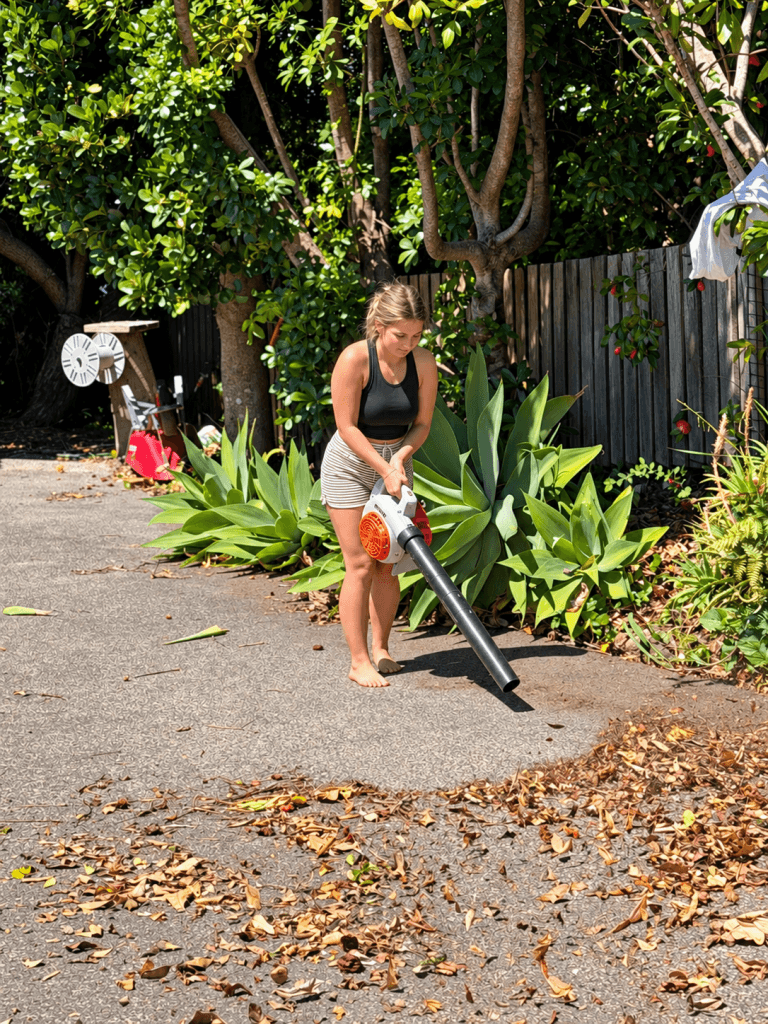
Now, I love gardening, but clearing the endless leaves from our driveway has always been one of those tedious jobs. For years, I’ve spent hours gathering them into piles by hand while Matt has happily operated the leaf blower. Well, last weekend I discovered the leaf blower! A little late to the party, given we’ve owned it for years, but within a fraction of the usual time, the driveway was clear, I was having a fabulous time, and even Caity, who has absolutely no interest in gardening, wanted a turn.
The funny thing was, despite saving myself hours, I didn’t finish any earlier. I simply found more gardening to do, which got me thinking about AI and how we use the time technology gives back to us.
Are we becoming more efficient at being busy?
There’s an interesting economic concept called Jevons paradox, first identified in 1865. Economist William Stanley Jevons observed that improvements in coal-use efficiency actually increased overall coal consumption rather than reducing it, because greater efficiency encouraged greater use. It’s a fascinating concept, and I wonder whether we’re seeing something similar with AI.
AI and automation are creating extraordinary opportunities to work faster and smarter. Reports, research, analysis and administrative tasks that once consumed hours can now take minutes, yet I wonder how many of us are actually benefiting from that additional time? My suspicion is that, much like my gardening, we’re simply finding more work to fill the space. More emails, more reports, more meetings. We’re becoming increasingly efficient, but are we becoming any less busy?
For the CEOs and leadership teams I work with, this is particularly relevant. For years, I’ve heard leaders tell me they don’t have enough time to work on their businesses rather than in them. Now, perhaps for the first time, technology is giving us a genuine opportunity to change that. The question is whether we’ll use the time to advance our strategy or simply become more efficient at being busy.
A recent Harvard Business Review article on what top performers do differently with AI explores the importance of how people use AI-enabled capacity. The opportunity isn’t simply to complete existing tasks faster, but to redirect the time saved towards higher-value activities, such as deeper customer understanding, better strategic thinking and sound human judgement. It’s a useful reminder that technology can create capacity, but it’s what we choose to do with that capacity that determines its value.
Efficiency isn’t the goal. Freedom to choose is.
I’ve been thinking about this in the context of my own strategy, which I’ve called Operation Freedom. My goal is to build a business that becomes less dependent on my time, through books, courses and resources that allow me to share my knowledge beyond the hours in my diary. AI is helping me make progress towards that goal, but it’s also giving me something equally valuable: the freedom to choose how I spend my time.
Sometimes that’s developing the next course or tweaking my books, while other times it’s reading a book, walking Vinnie or spending a sunny afternoon in the garden. The important thing is that I’m choosing, rather than simply filling whatever space appears.
The same principle applies to business leadership. If AI gives you and your leadership team five additional hours a week, where would those hours create the greatest value? Developing your people, building stronger customer relationships, exploring new markets or finally progressing those strategic initiatives that never quite get the attention they deserve? Perhaps it’s simply creating some breathing space to think, reflect and make better decisions.
Of course, this only works if you’re clear about what you’re trying to achieve. As I’ve written previously, a strategy day is only as valuable as what happens afterwards. Without clear priorities and a commitment to execution, even the best intentions get swallowed up by the demands of everyday business.
Without a clear strategy, the time AI gives us will almost certainly disappear into more activity. With one, it becomes an opportunity to make meaningful progress, both professionally and personally. So, here’s my challenge: before you fill the time AI gives back, decide what you actually want it for.
Becoming more efficient is wonderful, but having the freedom to choose what you do with that efficiency? That’s where the real value lies, and personally, I’m rather enjoying my newfound freedom, even if it does involve a leaf blower!