Blog & Resources/

Are You the Smartest Sceptic in Your Own Business?
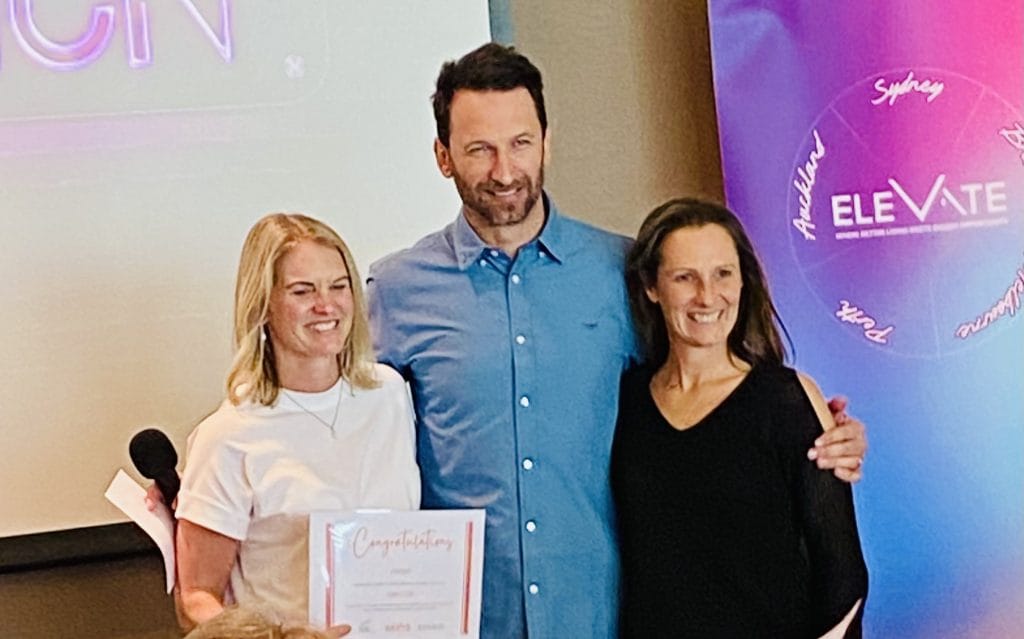
This weekend, 50 of us from Tairua, a town of around 1,600, drove up near Auckland to hear Max Hoonhout speak. Bad boy to Iron Man. My super-fit, healthy friends had been talking about it for weeks. I like to include myself in that ‘fit’ bracket. 😊
I’ll be honest, before I’d even left the house, I had a feeling I was being set up to be sold to. There were murmurings in my head saying pyramid scheme, and the potential to be pushed into a healthy cult (could be worse ones, of course). I was being a bit judgy. There was the occasional inward eye roll as I prepared to be preached to by the converted.
Ok, so I am human. That said, I did what I always do, I switched the mindset – from scepticism to curiosity and open-mindedness.
By stepping out of my comfort zone, I found that Max’s story didn’t disappoint. He had turned his life around, and there was a lesson there for everyone. The presenters knew the views of all the sceptics in the room and met them head-on. There was visual proof of success, including from my friends in the room, and scientific evidence from experts on what I was hearing. I left with sound advice on how to make further improvements to my health and wellbeing, and got to spend time with a fun crowd of everyday (albeit, again, super fit) people who were smashing life goals and travelling the world through this enterprise.
I took what I needed and will embed it in my life. I left what wasn’t right for me at this time, whilst recognising my friends’ success in the room. Kudos to you, Jacqui Gage-Brown, Gina Easton and Gabrielle Deane. You are leaders, leading from the front. Proud to be part of your tribe.
The Drive Home
It was on the drive home that I started thinking about why this matters far beyond a weekend event.
I’d walked in expecting to be sold to. I’d walked out with my thinking sharpened, a few new ideas to test, and genuine respect for the people in the room. The gap between those two states, the closed and the open ones, was small. It took about 90 seconds of internal correction in the car park. Yet that small shift is the one I see CEOs and founders struggle with most. Not because they aren’t smart, quite the opposite in my view.
When Experience Becomes the Blind Spot
I work alongside leaders who are intelligent and vastly experienced. Yet on occasion, they can be short on curiosity. They’ve heard the idea before. They tried something like it years ago. They know their industry, their team, and their customer better than anyone. However, the contrary view is that they are stuck because of this very way of thinking.
Scepticism is one of the most costly habits a senior leader can carry. It looks like discernment and feels like experience, but in fast-moving markets it quietly closes the door on the very ideas, people, and possibilities that would move the business forward. Curiosity is the harder, more profitable posture.
Interestingly, McKinsey research on leadership blind spots found that only a third of executives believe the quality of their decision-making is very good, and 60 per cent thought bad decisions were about as frequent as good ones. The same body of work has consistently shown that senior leaders tend to overestimate the health of their own organisations compared with how the rest of the business actually sees it. Knowing more does not protect you from this. In some cases, it makes it worse. McKinsey & Company
Harvard Business School’s Francesca Gino, who has spent years studying curiosity in workplaces, makes the same point from the other side. Her research found that when curiosity is triggered, leaders and their teams think more deeply and rationally about decisions, come up with more creative solutions, and build more trusting and collaborative relationships. The leaders who keep growing are not the ones who know the most. They are the ones who stay curious the longest. Harvard Business Review
What This Looks Like in a Mid-Market Business
In practice, it shows up like this.
A founder dismisses feedback from a younger team member because they have “been doing this for twenty-five years.” A CEO refuses to revisit a pricing model because the last attempt to change it, four years ago and in a very different market, didn’t work. A leadership team agrees on a strategy in the room and then quietly carries on as before, because each of them has privately decided they know better than the plan.
None of these people is foolish, though I would argue that they are stuck. The pattern is consistent. The leaders who break through their plateau are not the ones who suddenly become more intelligent. They are the ones who stop using their experience as a shield and start using it as a starting point.
The Cost of Being the Smartest Sceptic
Scepticism is cheap. It costs nothing to dismiss an idea. It costs nothing to point out why something won’t work, has been tried before, and isn’t right for “a business like ours.” It feels like rigour and it often passes for wisdom in a leadership team.
Curiosity is more expensive; it costs you the comfort of being right. It costs you a bit of time, a bit of ego, and the willingness to sit through the discomfort of considering that the answer might be somewhere you haven’t looked yet.
That is the trade-off I’d ask any leader to look at honestly. Not in theory, but in the last conversation you had where you closed the door on an idea before you’d fully heard it. The last hire you didn’t make because they didn’t fit the pattern. The last piece of advice you waved off because the person giving it hadn’t been where you’ve been.
So, How Does This Tie to You?
What are you saying no to in business right now because you think you know better? Is it ‘it’s been done before and didn’t work’? ‘What do they know?’
How open are you, honestly, to shifting from scepticism to curiosity to support your growth, personally and professionally?