Blog & Resources/

The CEO’s Cyclone: Why Most Leaders Prepare Too Late
Last weekend I fell asleep at 8.30pm while the house shook. Cyclone Vaianu was sitting on top of Tairua. The wind was loud enough to feel through the pillow, and I was out cold, not because I was calm but because I was exhausted from the preparation.
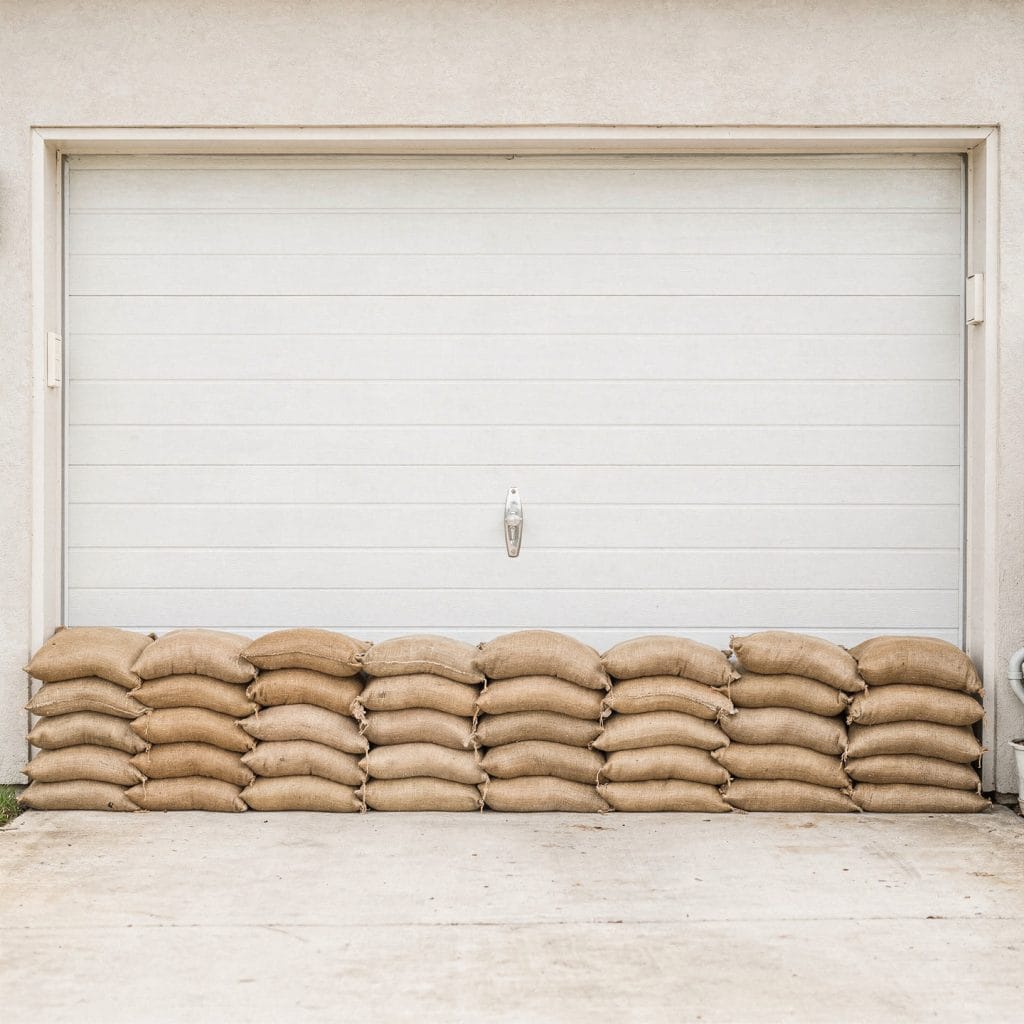
Every piece of outdoor furniture was inside, sandbags filled and positioned at the doors, two weeks of food in the pantry, satellite internet sorted, rooms made up for anyone in the community who might need somewhere dry, the generator fuelled and ready, and the fridge lifted onto blocks just in case. The event, thankfully, turned out to be a non-event, and the only reason I prepared like that was because of Gabrielle.
What a candle taught me about preparation
When Cyclone Gabrielle hit a few years ago, our emergency kit consisted of toilet rolls, extra beer and wine, and an Ecoya candle. I am not exaggerating. We had mood lighting and alcohol. What we did not have was drinking water. Seven days later, we still had no power, no water, no internet, and no road out of town. Food in the fridge had spoiled. Work was impossible. Friends across town were still trying to get floodwater and silt out of their living rooms.
I learned something in that week that has stuck with me. I am not someone who needs the same lesson twice. Which is why I find it so strange, as a coach, watching business leaders who clearly do.
The signals are rarely subtle
Right now in New Zealand the economic signals are loud. Interest rates. Margin pressure. Customers taking longer to decide. Team capacity stretched, or the opposite, not enough to do. Geopolitical noise pushing through the cost base, tariffs shifting quarter by quarter, supply chains that were stable for a decade suddenly not. The noise is like thunder rolling in before a storm, impossible to miss.
And yet I keep sitting across from CEOs standing in the middle of it like deer in the headlights, watching, waiting to see what happens, hoping the next quarter will tell them something the current one has not already told them.
Then the quarter lands badly, and the story becomes the economy, or the sector, or the election, or a key supplier, or the hire that did not work out.
Everything except the honest version, which is usually: I saw this coming and I did not act on it.
Preparation is not prediction
Here is the distinction that matters. Preparation is not the same as prediction. I did not know Vaianu would be a non-event. I did not know Gabrielle would leave us without power for a week. You do not prepare because you know exactly how the weather will land. You prepare because the signals are there.
This is where most leaders get stuck. They confuse not knowing the outcome with not knowing enough to act. So they wait for clarity that is never going to arrive, because clarity is a lagging indicator. By the time you have it, the window to prepare has closed.
The research on this is consistent and uncomfortable. A Harvard Business Review analysis led by Ranjay Gulati studied 4,700 public companies across the recessions of 1980, 1990, and 2000, and found that only 9% flourished, outperforming competitors by at least 10% in sales and profits growth. A follow-up Bain analysis of the Great Recession found that among companies that stagnated in the aftermath, few had made contingency plans. When the downturn hit, they switched to survival mode, making deep cuts and reacting defensively.
McKinsey’s own work on through-cycle outperformers found a similar pattern. Companies whose growth started during the downturn drove value creation of 5.3 percent excess total returns to shareholders, roughly five times higher than the average company in their sample. 95 percent of those outperformers proved themselves in the downturn, not after it.
The advantage does not go to the leader who guessed right. It goes to the leader who moved early.
What strategy actually is
This is what strategy actually is. Not a document. Not an annual offsite. A clear read on the signals, a set of decisions made in advance about what you will do when the weather turns, and the discipline to act on them before you have perfect information.
The leaders I work with who come through hard years well are not the ones with a crystal ball. They are the ones who use strategy as a muscle, they anticipate, they stress-test.
On the downside, they ask the awkward question about key person risk before someone resigns, they run the restructure conversation on paper before they have to run it in real life, and they decide what they will do if revenue drops 20% before it does.
They do the same work on the upside. They have the finance facility already in place so they can move on an acquisition in weeks, not quarters. They know which three roles they hire first if demand doubles, and they have already had the conversation with the people they would promote. They have cleaned the business up to the point where if an exit offer arrived tomorrow, they could actually take it.
Opportunity arrives on its own timeline, and the leaders who capture it are the ones who decided in advance that they would.
The freeze is a choice
Here is what I want CEOs to hear clearly. The freeze looks like caution from the inside. It feels prudent. You tell yourself you are gathering information, watching the market, being careful not to overreact. From where I sit as a coach, it looks different. It looks like a leader who has not separated the discomfort of making a decision from the risk of making the wrong one. Those are two different problems. The first is about you. The second is about the business. Confusing them is how good companies drift.
Clarity plus cadence is what gets you through uncertain markets. Not certainty. Not a perfect forecast. A clear enough read on what is actually happening, and a regular rhythm of deciding and acting on it. The leaders who do this well are not braver than the ones who freeze. They have just built the habit earlier. They have had their Gabrielle, and they decided they were not going to have another one.
A question worth sitting with
So here is what I would ask you to sit with this week, honestly. What are you currently calling “waiting to see how things play out” that is actually just refusing to prepare?
What is the conversation you are not having, the scenario you are not planning for, the decision you are leaving to run itself because deciding feels uncomfortable and waiting feels responsible? Those are not the same thing. The gap between them is usually where the next bad quarter is born, or where the next good opportunity quietly walks past.
Sources
Walter Frick, “How to Survive a Recession and Thrive Afterward,” Harvard Business Review, May–June 2019.
Rebecca Doherty, Anna Koivuniemi, and Sean Brown, “Through-cycle growth, from downturn to recovery,” McKinsey & Company, October 2020.